Jizō and the Buddhist Half-Open Door

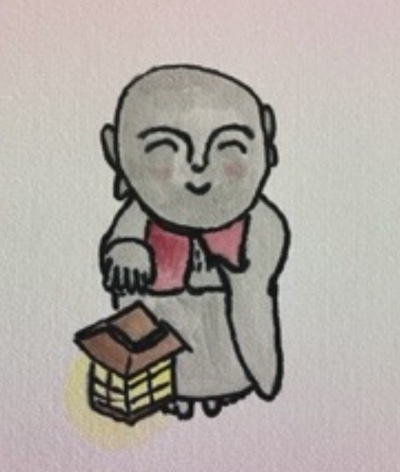
Sawako Utsumi frequently explores religious themes in her artwork, drawing inspiration from Buddhism, Christianity, and Shintoism. Among these, Buddhist motifs are especially prominent, often serving as the central focus of her creative expression.
The focus in this article is the significance of Jizō (Ojizō-sama) in Japan.
The MET Museum says, “Jizō’s compassionate presence illuminates the righteous way from hell to paradise, and he saves from harm those who call out to him.”
Henjō (816-890) beautifully wrote:
On his way to leave the world, a man
Comes to rest
Beneath the trees
But he finds no shade
For every Autumn leaf has fallen.
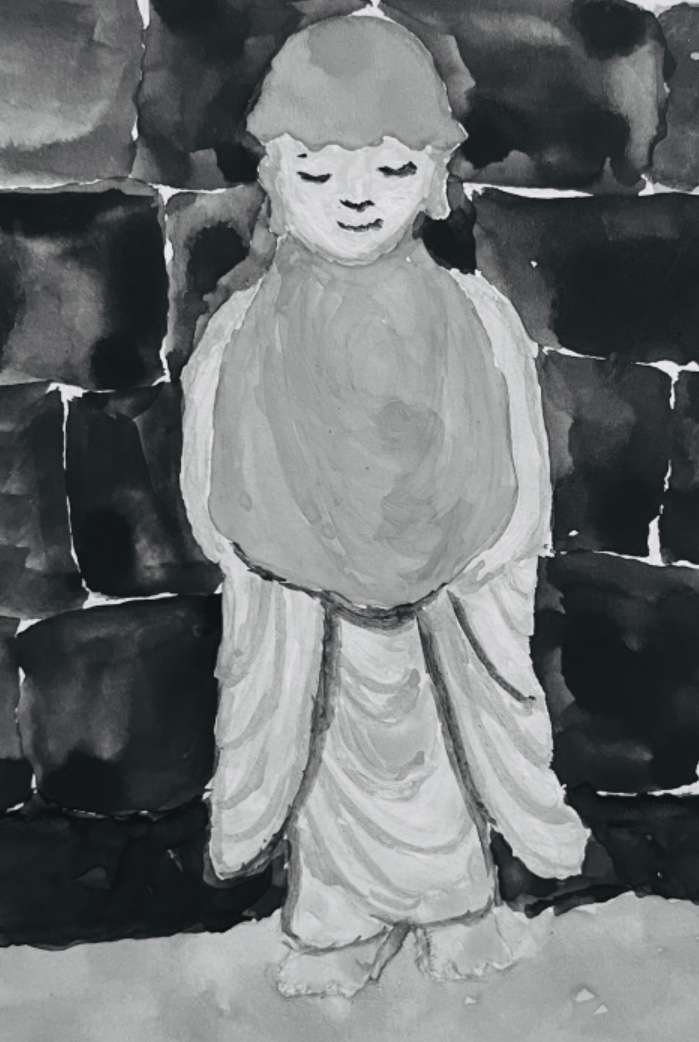
These words are deeply poignant, reminding us that life always teeters on the edge of impermanence. Even in his final moments, the revered Buddhist monk remains grounded in realism. Henjō’s unwavering faith in Buddhism resonates clearly through this beautifully composed poem.
Uejima Onitsura (1661-1738) was born in Hyogo. However, it was Osaka where this esteemed haiku poet became famous.
In a lovely poem, he wrote:
Useless dreams, alas!
Over desolate fields
winds whisper as they pass.
Matsuo Bashō (1644-1694) beautifully wrote:
Falling ill on a journey
my dreams go wandering
over withered fields
Overall, Utsumi portrays the spiritual presence of Jizō as partially revealed in this world—both visually and spiritually connected—yet enduring far beyond the fleeting existence of the viewer.
Written by Lee Jay Walker
https://fineartamerica.com/featured/jizo-and-the-buddhist-half-open-door-sawako-utsumi.html?newartwork=true Jizo and the Buddhist Half-Open Door
https://fineartamerica.com/featured/jizo-and-the-buddhist-lantern-of-life-sawako-utsumi.htmlJizo and the Buddhist Lantern of Life
 Sawako Art